About ENVX Symposium

Lewis & Clark College’s Environmental Studies Program sponsors an annual Symposium series of events, building on the broad theme of Environment Across Boundaries (ENVX). ENVX speaks to how our students cross a wide range of intellectual boundaries as they seek new scholarly concepts and skills; geographic boundaries as they apply these concepts and skills to explore environmental issues around the world; and communication boundaries as they engage with people on all sides of these issues, ideally working toward mutual respect and collaborative solutions. Symposium offers the Lewis & Clark community and general public an opportunity to experience this broader approach to environment.
Our 27th annual Symposium, From Eco-cities to EVs: Green Innovation in China and the U.S., will be held September 30 through October 4, 2024, focusing on China’s role in and response to modern environmental change. This theme will be explored through a series of events, including keynote addresses, a panel discussion on electric vehicles, and a closing reception.
We welcome you to cross intellectual, geographic, and communication boundaries with us in the context of some of the most important environmental issues we face today.
 Kaylee Howser BA ’24More about Kaylee
The experience of being a cochair for the 2023 ENVX Symposium has taught me so much, and I am so excited for the event in the fall. I highly recommend getting involved in the symposia at L&C as an organizer!
 Grace Blunck BA ’24More about Grace
As a cochair for the fall 2023 ENVX Symposium, it has been an amazing opportunity to connect with different global, national, and local scholars, entrepreneurs, and leaders. I feel that I have grown so much through this experience.
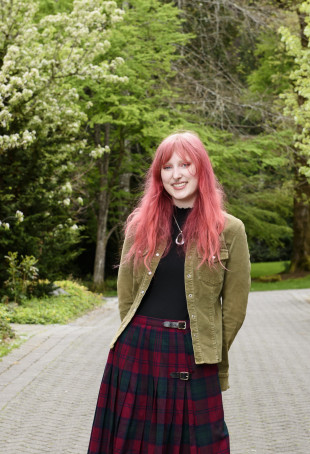 Julia Einaudi BA ’25More about Julia
I am a cochair for the fall 2023 ENVX Symposium. It has been so cool to find speakers and organize events, and I am so excited to hold the symposium in the fall!


